

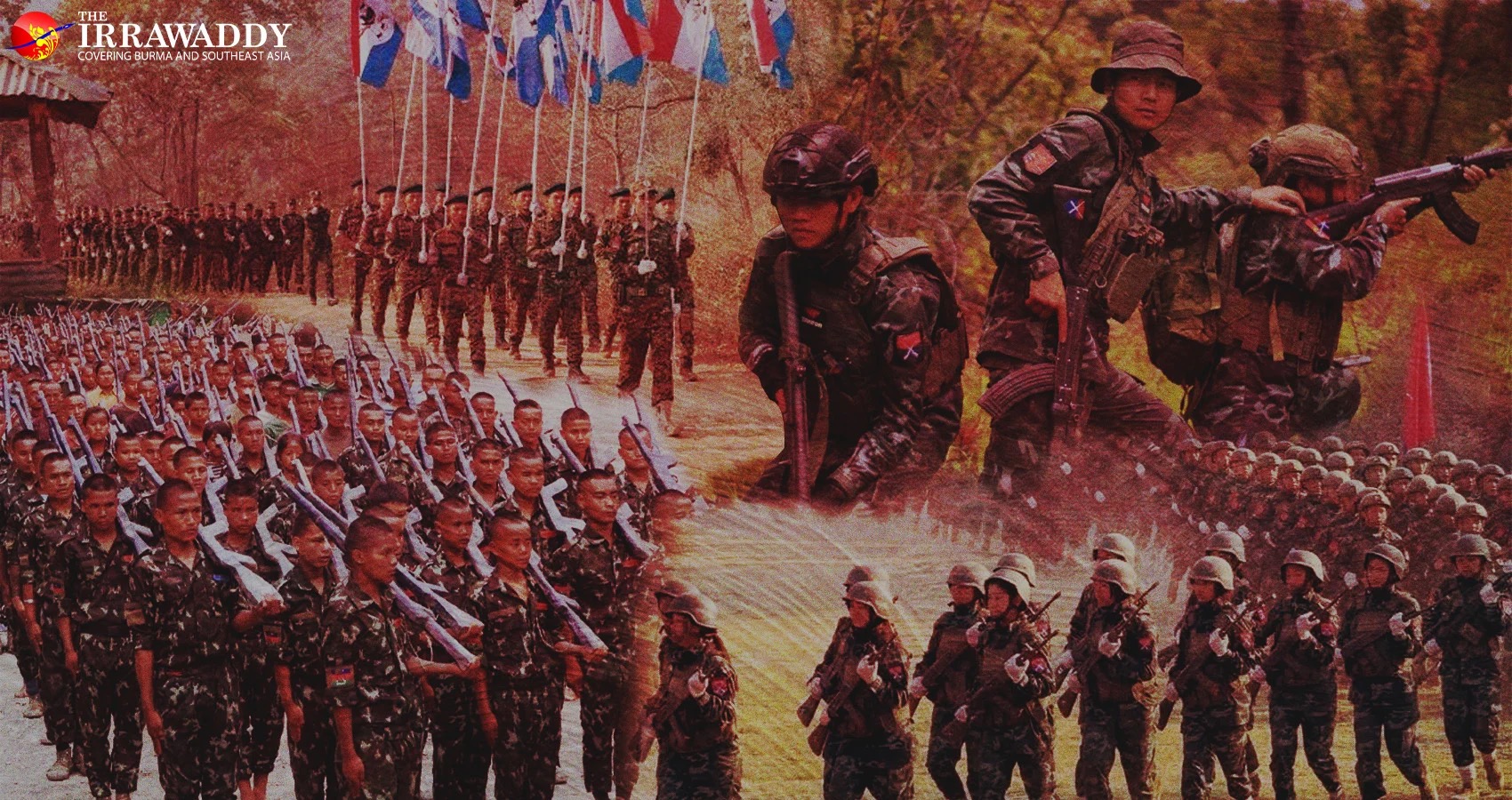
Cooperation Before Reconciliation: A Practical Path for the Chin Resistance
Chin communities have been divided for generations. Their state’s rugged topography and its more than 40 dialects have divided communities long before politics did. The revolution that followed the 2021 coup has brought Chin communities closer together than at almost any point in their history. Some new frictions have also emerged in the past five years, especially among revolutionary forces, but there exist shared interests and values that make Chin cohesion viable.
For now, however, these new or residual divisions among Chin resistance groups are a significant strategic advantage for the military regime. While the Chinland Council, Chin Defense Forces, Chin National Front, Chin Brotherhood, Chin National Defense Force, Chin People’s Army, Interim Chin National Consultative Council or any other Chin groups compete with each other, the regime gains room to maneuver, international supporters hesitate, and ordinary Chin families pay the price. This strategic liability confuses the outside world, undermines operational effectiveness, and drains energy that the movement needs now more than ever.
The various Chin forces do not have to resolve all their differences in order to build a relationship that would allow them to defend and serve the Chin people more effectively. But they need a set of rules to govern their relationship and prevent a recurrence of intra-resistance conflict, enable stronger revolutionary operations, and help them better serve the Chin public.
Recent months have illustrated the cost of division and benefit of coordination. On Aug. 3, the Chin National Organization dismissed its chairman after he held unauthorized talks with regime representatives in India, a reminder that the pull toward separate deals with Naypyitaw persists. On March 30, 2026, the Chin National Front (CNF) became one of the founder members of the nationwide Steering Council for the Federal Democratic Union (SCEF) alongside the National Unity Government (NUG, CRPH, Kachin Independence Organization (KIO), Karen National Union (KNU), and the Karenni National Progressive Party (KNPP), extending Chin representation into the strongest resistance coalition in Myanmar’s history.
In southern Chin State, the Chin People’s Army (CPA) alongside allies including the Arakan Army (AA), Yaw forces and People’s Defense Forces (PDF) in Magwe Region repeatedly repelled large-scale regime offensivesaround Mindat and Kanpetlet in June and July. It was coordination that produced those gains, well before any talk of full political unity.
Despite their unresolved internal differences, Chin groups are already participating in national and regional inter-ethnic coordination. If they can cooperate with other ethnic resistance organizations and national democratic institutions despite political differences, why can’t they cooperate among themselves?
Calls for Unity are not Enough
Most appeals for Chin unity urge the various forces to set aside their grievances, rebuild brotherhood, and reconcile. The instinct is commendable, but it is hard to achieve while fighting continues and old wounds remain open. Asking the various resistance organizations to unite in the middle of a war after enduring painful losses sets a goal that may be out of reach for many years.
Instead, coordination under a set of shared rules can create the conditions for trust to grow. In other words: what is needed is a workable system for conflict resolution, not agreement on every point of contention or grievance. Such a working relationship is possible now. Chin resistance groups can stop harming each other, coordinate on practical matters, and serve their communities without conceding political legitimacy or being asked to “move on” past their grievances.
This approach asks little of anyone politically. Groups need not recognize each other’s political legitimacy. They do not have to abandon their own structure, leaders, or long-term aims. They must simply agree to a few rules for how they will interact with each other and with civilians in shared and contested areas, with a well-designed process implemented by skillful mediators and supporters.
Start Small
The path toward trust can begin with small agreements in narrow areas. Implemented faithfully, modest agreements, can help build trust and set a precedent for the next step.
Competing Chin forces could begin in an area where the stakes are comparatively low and the common interest is high, like humanitarian assistance, support for internally displaced people (IDPs), or education. Embattled populations need support urgently. The various groups that govern them could start with something like civilian protection, humanitarian corridors with procedures for movement of medical personnel, food, and relief supplies, and communication mechanisms such as a direct hotline between designated representatives. They will also need a dispute resolution platform with a small neutral mediation team that addresses incidents before they escalate.
Ask the People
A useful starting point may be to simply ask the communities the various resistance groups serve what they actually need. They may prioritize safer roads, immunization, more teachers, or information about regime airstrikes. Needs can be met in several ways, which opens space for practical bargaining.
Picture a contested checkpoint. One side may frame the matter as control of territory, a hard line that invites a standoff. But beneath that positional line sit practical needs or interests. A simple rule for how the checkpoint operates could serve those shared needs or interests while pushing territorial claims into the long grass. Behind every rigid position there is often a practical consideration that some modest rules can satisfy.
Give Grievance its Space
This approach asks no one to forget what has happened. Real harm has occurred between Chin groups, and grievances date back generations. Families have lost members, communities feel betrayed, and these wounds are part of why the division runs so deep. Grievances left unaddressed will resurface and poison cooperation.
The answer is to give grievance its own, separate space, away from day-to-day coordination. Chin society has institutions that could contribute meaningfully to this work. Elders and faith leaders carry moral authority. A process led by respected elders or church leaders could document what happened, create space for acknowledgment, lead rituals of recognition, and prepare the ground for healing or even accountability once conditions allow. Keeping this work in a dedicated track lets coordination move forward while giving grievances the serious attention they deserve.
How We Talk
The way Chin people discuss the conflict, online and in person, also shapes what is possible on the ground. Rumors and accusations travel fast, and a single inflammatory post can undo weeks of quiet progress. Old narratives anchor how each side reads every new event.
The diaspora carries some responsibility here. Its distance from the fighting can make it easier to hold to the hardest line. Instead, Chin people living abroad should seek to check claims before sharing them and urge their contacts on the ground toward cooperation, thereby lowering the temperature for everyone.
The diaspora can also do more by supporting humanitarian work regardless of faction; encouraging leaders to communicate directly; avoiding financing that exacerbates division; providing resources and spaces for dialogue; supporting independent documentation; and encouraging churches and civil society organizations to become bridges rather than partisan platforms.
What Cooperation makes Possible
Think what could be achieved. Fewer Chin civilians would be displaced or killed. Groups could turn more of their strength against the regime. Governance could improve as administrators focus on schools, clinics, and courts rather than on managing their rivalries. Greater coordination could make it easier for international humanitarian organizations and donors to support services across divided areas without being perceived as “taking sides.”
A Chin resistance that coordinates, even at a basic level, is harder for the regime to divide and exploit. Reducing conflict among Chin forces would substantially strengthen the resistance’s ability to defend Chin communities against the regime and challenge military control across the state.
Who will Do it?
It is the Chin forces on the ground that must take the lead in deciding how to manage their differences and coordinate their service to the Chin people. External supporters—the diaspora, church leaders and international partners—can help generate ideas for cooperation, carry proposals between competing Chin forces, and help hold them to the agreements they reach. But they should stay out of the political contest and avoid any move that looks like pressure, or like attempts at leadership over matters the groups themselves should own.
The Road to Reconciliation
The first step can be small—one humanitarian project, one communication channel, one non-aggression commitment, or one jointly administered public service. Each could begin to change the political culture. But reconciliation remains a worthy long-term goal. The Chin people will need to heal, and one day the groups that are currently divided may stand together. The sooner the movement builds a path to it, one practical agreement at a time, the sooner that day will arrive. Coexistence can begin today, while trust grows over time.
These efforts are vital for Myanmar’s future as a whole. A dictatorship ruling from Naypyitaw means indefinite siege and persecution for Chin State, regardless of how the groups eventually settle their differences. Chin communities must find peace with each other before they can help build peace with the rest of Myanmar.
Salai Henry Lyan is the secretary of the Chin Peace & Reconciliation Initiatives.
David Sol is the pseudonym for a peacebuilder focused on Chin State.
NOTE: This article originally appeared in The Irrawaddy. Read the original article here. https://www.irrawaddy.com/opinion/guest-column/cooperation-before-reconciliation-a-practical-path-for-the-chin-resistance.html

